
Resentment is needing others to change so you can stay the same
To hate is to feel helpless

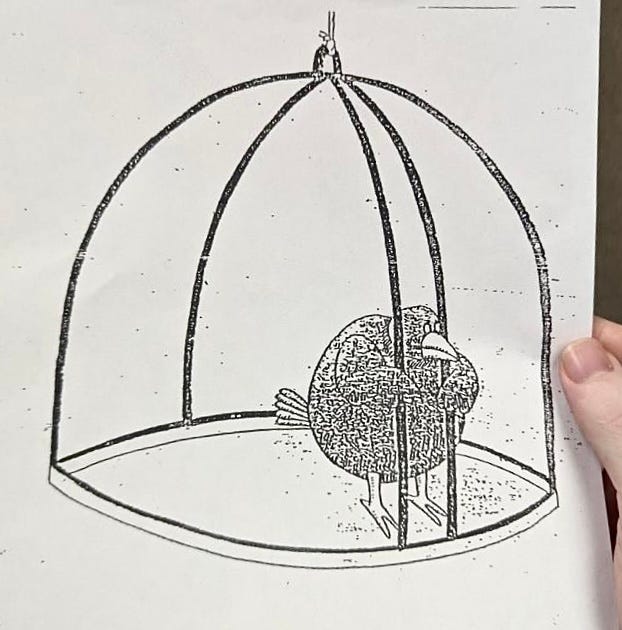
Resentment is a difficult topic to talk about, mostly because it tends to lie under the surface of relationships and is socially frowned upon to possess. Some people are more prone to feeling it than others, but even those who appear otherwise good-hearted and well-adjusted have, at one point or another, felt resentment for another person in their lives.
I certainly have, and at times have been surprised by my capacity for it. But even more surprising was how much it could change—I could go from hating someone to feeling neutral or slightly positive about them after some time and distance, or start loving someone and slowly watch that affection curdle into hatred. Given that it ebbs and flows, it must not be an inherent quality of my character. So I wondered: what are the conditions that reliably produce it, and how does one navigate it? Or even better, prevent it from arising at all?
What I have come to is that resentment is rooted in dependency. It is the need for others to be different in some way—to give you something you want but feel you are being denied, to stop doing the things you find distasteful, to conform to your ideas of how a person ought to live. In other words, to be the version of them you want them to be.
To elaborate on the aspect of need: for resentment to form, it is not enough to simply want someone to be different. You have to require it, to feel that it is necessary, that there are stakes if they don’t change. That your well-being or identity or desired future is threatened by their rigidity, and there is something to be protected or gained if they do change.
And on top of the personal need, there has to be resistance. You have to be wanting the thing and not getting it. It is the feeling of “Why don’t they just ____?” or “Why can’t they ____?” in the face of a reality where they clearly aren’t doing or being those things. It is an awkward stalemate, a desire locked in suspension.1
But to cling to resentment is to cling to your own helplessness. If you maintain the belief that it is on others to change to make you happy, then the burden doesn’t fall on you. You can stay the same, and wait for what you want to fall out of the sky. You can stay in a perpetual adolescence, refusing to take responsibility for your own life.
This became clear to me recently when I processed lingering resentment I had for my mother. I realized that I hated her because at some level I still needed her to be the mother I wanted but didn’t have. But then I realized, “Oh wait, I’m the adult now.” I am responsible for getting my own emotional needs met. If someone is not meeting those needs, it’s on me to adjust my expectations and behavior accordingly and find others who can. Holding on, waiting and hoping for a parent to change is the behavior of a child, of one who believes themself to be helpless in a stork-delivered basket.
In freeing her from the responsibility of meeting my emotional needs, I freed myself from the illusion of helplessness. I could focus on creating the life I want in the present and future instead of fixating on what someone couldn’t give me in the past.
You don’t need to know someone well in order to resent them. For example, envy can trigger resentment. This, too, has its roots in helplessness. In the times when I was envious and resentful of someone else, it was because I didn’t want to accept that I was in a world where they would be the thing I wanted and I couldn’t. It wasn’t them I hated, it was a hypothetical world that I didn’t want to live in. But they weren’t doing anything that was actually keeping me down or standing in my way. When I cultivated the trait or ability I felt I was missing, my resentment for them would disappear because I realized I wasn’t inferior like I had feared.
If you are dealing with resentment, it can be helpful to ask: what is the unfulfilled promise that exists between us? And if there isn’t one, what do they threaten about my sense of the world, what is possible, or who I am? In what ways do I feel like they need to change, so that I can stay the same?
An easy way to find out what you are resentful about is to imagine the person you resent apologizing to you. What would you want them to say? That is the sticking point, the part you cannot forgive, the thing you need to be different.
And once you have identified that, you can challenge it. You can find a way out of your perceived helplessness. The most loving people I know, those who seem constitutionally incapable of harboring resentment for others, possess a grounded confidence in their own ability to get what they want and become who they want to be. It is not arrogance, but faith. It makes no sense for them to hate, because it doesn’t get them what they want. It only traps them in believing they can’t get it.2
I was talking to my friend Grant the other day about this essay, and he said something beautiful. He said if resentment is needing someone to be different, love is wanting them to be exactly the same. It is feeling they are perfect exactly how they are. For this reason, the two are antithetical—it is hard for love to exist in the presence of resentment.
I aspire to feel love, which I define as a sense of uncomplicated goodwill and acceptance, towards everyone in my life. In order for this to happen, I need to notice when resentment is brewing and take steps to address it. One simple and often-overlooked way is to set boundaries.
I like to believe that boundaries are the distance we need from someone to still love them. Sometimes resentment is simply a result of miscalculated distance. There are people I can only be friends with even if we both have feelings for each other, because either we tried to date and it went horribly, or we know that if we were to date we would make each other miserable. With them, being friends is the appropriate distance.
Some people I can only be acquaintances with, because our worldviews are too different or we trigger each other in ways that make friendship impossible. Some people I can’t talk to at all, because the history is just that painful or their presence is actively harmful. Even though it’s sad they can’t be in my life, I find that is the distance I need to hold them in goodwill, to not resent them for being who they are.
It is important to find the distance at which resentment cannot form, and to find a configuration in which your demands match the other’s ability and willingness to meet them. This removes the need for bargaining and makes room for enthusiastic participation.
When we work through our resentment, we open ourselves up to possibility. Our lives become ours to self-determine, to dream up and make real. In giving ourselves the freedom to be how we wish, we give others that same freedom. We make love possible.
It can be easier to hate people you don’t know well, because you don’t have the rapport or leverage to influence their actions. And for this same reason, why resentment may be absent at the start of intimate relationships but slowly and more deeply entrench itself until it becomes shockingly large. It sneaks up on you after they have let you down in a thousand little ways, and you run out of moves to try. You give up and it is then the resentment grows.
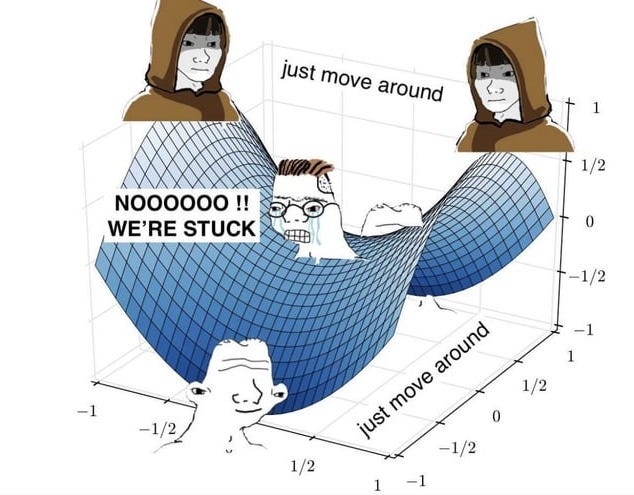
They believe you can “just move around.” The field is open to them. Hating someone is being the guy in the middle.
I needed to read that today. Thank you for this!
It always feels like the wind is knocked out of me when someone can so eloquently articulate what has been sitting on my chest since foreverr.